How do I read this?
Indian system
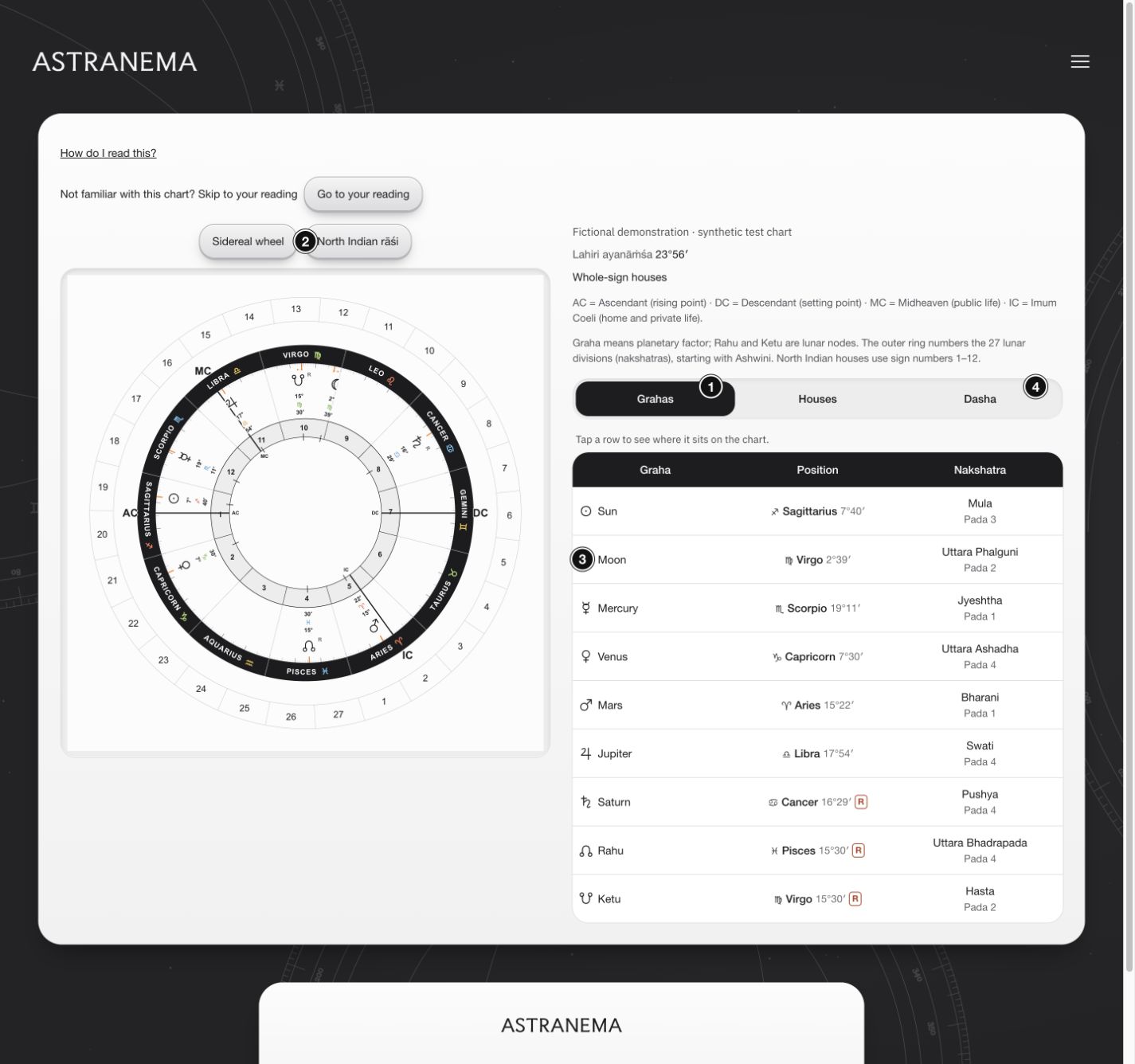
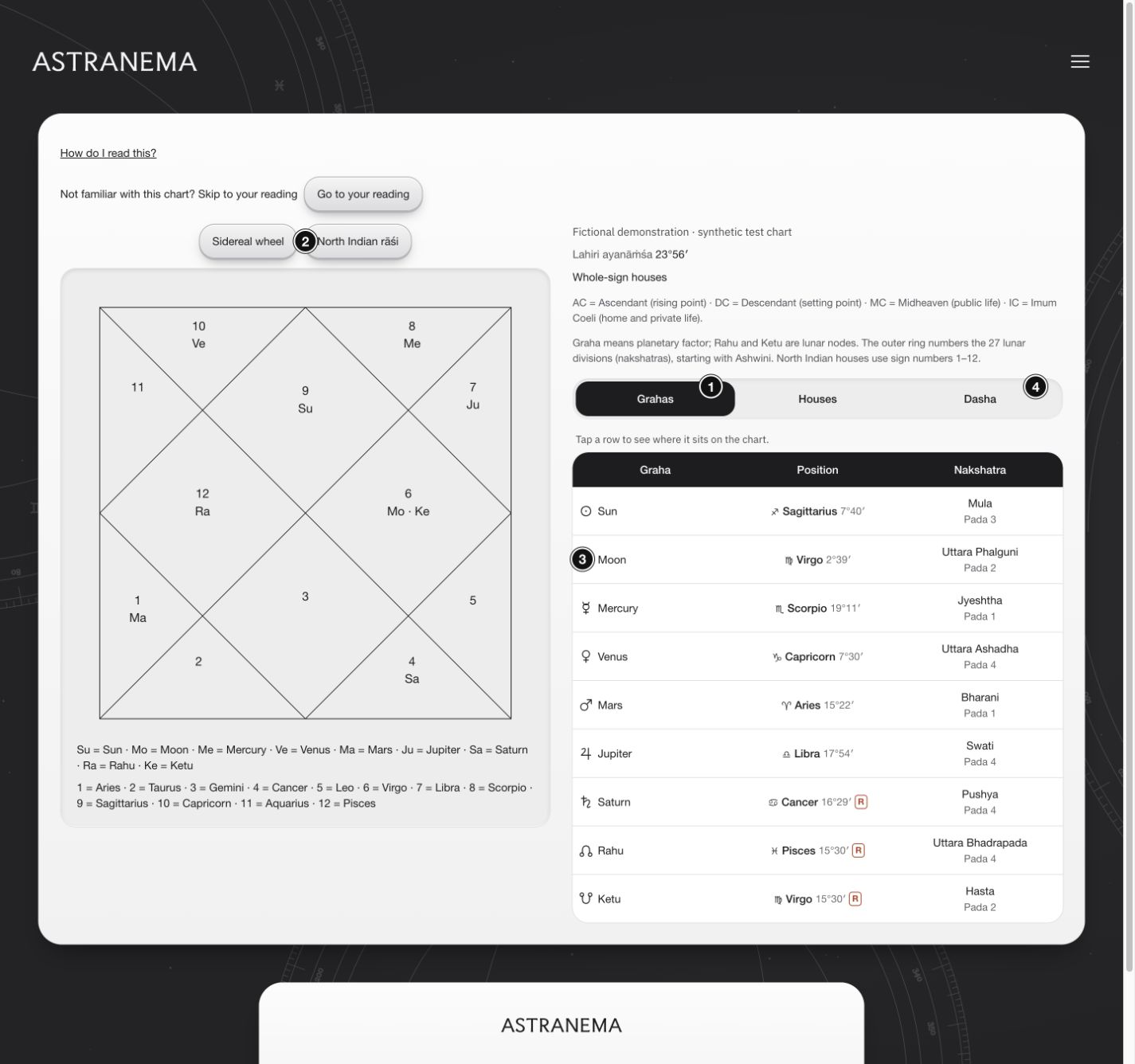
Two ways to look at the same Indian chart, with names available in the tables.
1. Use the names before the symbols
Open Grahas at marker 1. In this demo the Sun row reads Sagittarius, 7°40′; use the written name beside the small symbol. Graha is the chart’s term for a planetary factor; Rahu and Ketu are the two lunar nodes. Read the sign and position beside each name. This system uses a different zodiac reference, so a sign may differ from your Western chart.
2. Choose the wheel or diamond
Use the two buttons at marker 2 to switch views; they show the same positions. In the second screenshot, the top centre says 9 and Su: the legend translates that to Sagittarius and Sun. In the North Indian diamond, the top central area is house 1 and houses continue counter-clockwise. Numbers inside the diamond identify zodiac signs, not house numbers. Use the Houses table to check a name rather than guessing.
3. Read the Moon’s row
At marker 3, the demo Moon row reads Virgo, 2°39′, Uttara Phalguni, Pada 2. Nakshatra names one of 27 divisions of the zodiac; pada names one of its four parts. These give the reading a more detailed symbolic vocabulary. You do not need to learn the names to understand the prose.
4. Keep the dates in perspective
Open Dasha at marker 4. Read across the planet’s written name, start date and end date; the current period is highlighted. Expand Subperiod dates for the smaller periods within it. Dasha is the name for these symbolic periods. They organise the tradition’s interpretation; they do not promise events. Skip to your reading whenever you want the everyday meaning.
You can return to your chart with your browser’s Back button. The reading is there to put the symbols into everyday words.
Explore your chart
Get to know the placements, signs and stories behind a birth chart.